CROSS, S.C. – A controversial proposal tied to a massive solar development in the Cross community is now headed before the full Berkeley County Council on Tuesday after a divided committee vote ignited fierce debate over growth, industrial zoning, and the future of rural land in Berkeley County.
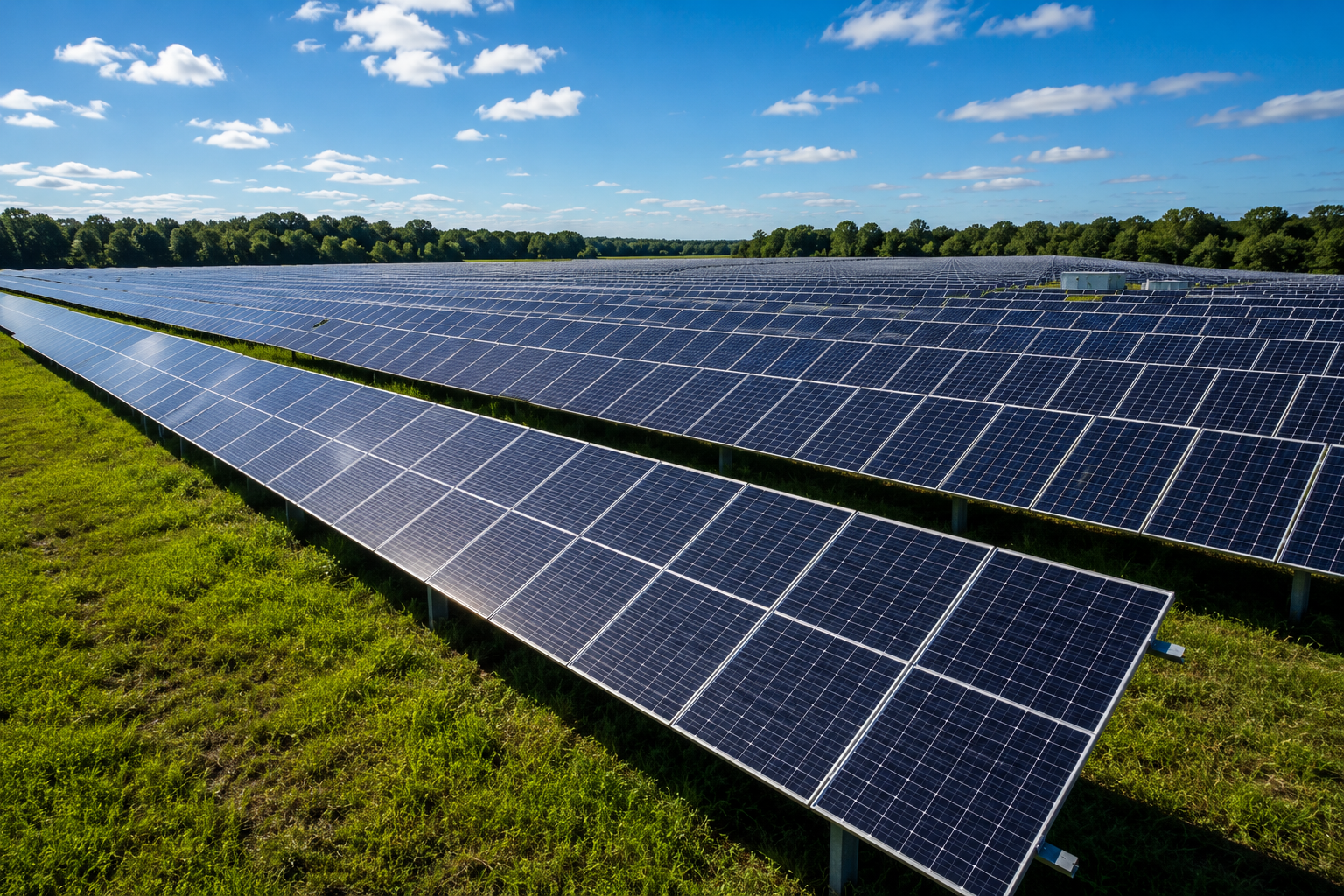
The proposed “Sandy Run Solar Project,” backed by RWE Solar Development LLC on behalf of Tall Corn Forestry LLC, seeks to lift Berkeley County’s large-scale development moratorium on more than 7,500 acres in Council District 7. Developers say the project would support an approximately 1,500-acre solar generating facility designed to help meet South Carolina’s rising power demands.
The issue is expected to draw another large crowd when it comes before the full county council this week, with residents already organizing online and urging neighbors to attend.
📰SUBSCRIBE: Get the latest Berkeley County, SC news delivered to your inbox.
“We need to be way louder in two weeks,” Cross resident Tricia Lynn McColly wrote on social media after the May 11 land use committee meeting. “There needs to be so many Cross residents that we won’t fit in that building.”
Committee Advances Proposal Despite Opposition
The Berkeley County Land Use Committee voted to recommend approval of lifting the moratorium during a contentious May 11 meeting that included public opposition and comments from county leaders.
Committee members Dan Owens, Amy Stern, Jarrod Brooks and Steve Davis voted in favor of advancing the request. Councilman Caldwell Pinckney, who is from Cross, voted against it, while Councilman Phillip Obie II and Councilman Tommy Newell recused themselves.
The request applies to three parcels totaling approximately 7,521.79 acres, though developers emphasized the actual solar facility would occupy about 1,500 acres.
Josh McNeely, head of utility-scale development for RWE, told council members the company sees the project as part of a long-term partnership with Berkeley County.
“We believe that this project in particular provides a great opportunity to help address the growing need for power, both locally and within the state of South Carolina,” McNeely said during the meeting.
Peter Stalter, lead developer for the Sandy Run Solar Project, described the site as uniquely remote and said the company designed the project to minimize impacts on nearby communities and the environment.
“We are located at least one mile from any public thoroughfare,” Stalter said. “That’s just something that we think is a well-sited project.”
Stalter said the company plans to partner with a local blueberry farmer for co-located agricultural use and pledged that the company would be financially responsible for eventually decommissioning the facility through bonds or letters of credit.
Developers also touted proposed community benefits, including energy bill credits for nearby residents, partnerships with Trident Technical College for solar technician training programs, and prioritization of local construction labor.
According to project information presented to the county, the solar development would represent more than $225 million in investment and generate more than $45 million in county revenue over the project’s lifespan. Developers say construction could create more than 100 temporary jobs and up to eight permanent maintenance and operations positions.
Supervisor Cribb Voices Opposition
Though he does not vote at the committee level, Berkeley County Supervisor Johnny Cribb delivered one of the meeting’s strongest statements against large-scale solar development.
“I’m against solar farms and large-scale solar farms in this county because of the reality of our county,” Cribb said.
Cribb argued Berkeley County is already carrying enormous growth pressure due to rapid residential and industrial expansion.
“South Carolina is the fastest growing state in the country,” Cribb said. “Berkeley County is often ranked the fastest growing county in the state.”
He warned the proposal could become a blueprint for future industrial-scale solar developments across rural parts of the county.
“This doesn’t begin and end with this project,” Cribb said. “I think it’s a template for future projects.”
Cribb also raised concerns about preserving green space, saying Berkeley County has worked to protect roughly 3,000 acres through its greenbelt initiatives.
“We’ve busted our tail over the last couple of years to protect 3,000 total acres in the entire county,” he said. “And what we’re talking about tonight — it flies in the face of that.”
The supervisor further questioned whether future tax incentive requests could follow if the project advances.
Council Split Over Power Needs and Growth
Councilwoman Amy Stern defended her vote to lift the moratorium, emphasizing that the action does not approve the project itself but instead allows additional review and questions.
Stern said the request is tied to concerns from Santee Cooper about future electrical demand.
“To my knowledge, this program has come to us because Santee Cooper flat out has said they need more power,” Stern said during the meeting. “They’re not going to have enough power by 2029.”
She added that county leaders still need answers about environmental impacts, wildlife concerns, transmission infrastructure and long-term decommissioning plans.
Councilman Caldwell Pinckney, whose district includes Cross, strongly opposed the proposal.
“You don’t know Cross,” Pinckney told fellow council members. “You don’t represent the community.”
Pinckney argued the project would negatively impact residents without delivering meaningful quality-of-life benefits.
“It’s not an asset. It’s a liability,” he said.
Residents Fear Industrial Expansion
Much of the public opposition has centered not only on the solar facility itself but also on concerns over the full acreage tied to the moratorium request.
Nicole Burbage, a member of Berkeley County’s Board of Zoning Appeals, said many residents are worried that lifting the moratorium on more than 7,500 acres could open the door to future industrial uses beyond solar.
“This conversation is bigger than solar alone,” Burbage wrote in a lengthy social media post following the meeting.
Burbage questioned why county leaders continue approving large-scale projects while infrastructure concerns remain unresolved.
“If the concerns that justified the moratorium still exist,” she wrote, “why are we accelerating toward even larger industrial-scale land conversions before existing infrastructure catches up?”
Cross residents echoed those concerns online in the days after the meeting.
“We don’t want a solar farm taking over our farmland and rural communities,” resident Tyler Brown wrote. “This land feeds families, supports wildlife, and is part of the country way of life around here.”
Others tied the debate directly to Berkeley County’s rapid population growth and infrastructure strain.
“The fact they are worried about running out of power is very telling,” resident Wendi Hyman wrote online. “Then slow down or quit building new communities.”
What Happens Next
The proposal now moves to the full Berkeley County Council on May 26 at 6 p.m. for consideration, where another large turnout is expected from residents both supporting and opposing the project.
If council members approve lifting the moratorium, the project would still face additional reviews and approvals before construction could move forward.
For now, the Sandy Run Solar Project has become the latest flashpoint in a growing countywide debate over how Berkeley County balances economic growth, infrastructure demands, energy needs, and preservation of its rural character.