

HUGER, S.C. — Set deep in the woods of Berkeley County, along a dirt path off Cainhoy Road and facing the Cooper River, sits one of the Lowcountry’s notable surviving colonial‑era churches.
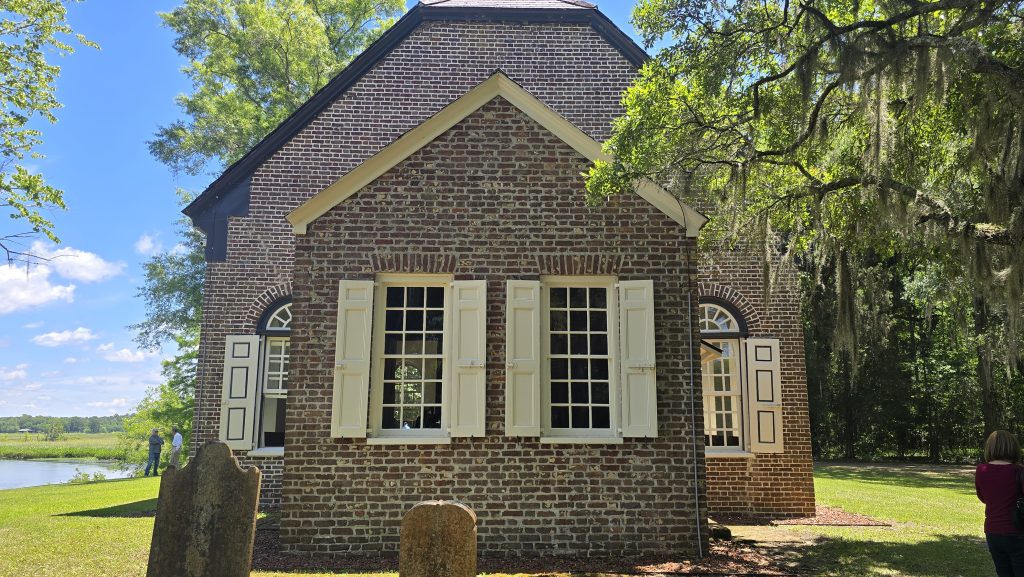
Built between 1763 and 1765 in present‑day Huger, Pompion Hill Chapel is recognized by historians as a well‑preserved example of an Anglican chapel of ease. Isolated from modern development and largely unchanged for more than 260 years, the chapel offers a rare glimpse into the architecture, religion and daily life of colonial South Carolina.

Though Charleston is famously known as the “Holy City” for its skyline filled with church steeples, Berkeley County quietly preserves some of the Lowcountry’s oldest and most historically significant churches — and Pompion Hill Chapel may be one of its crown jewels.
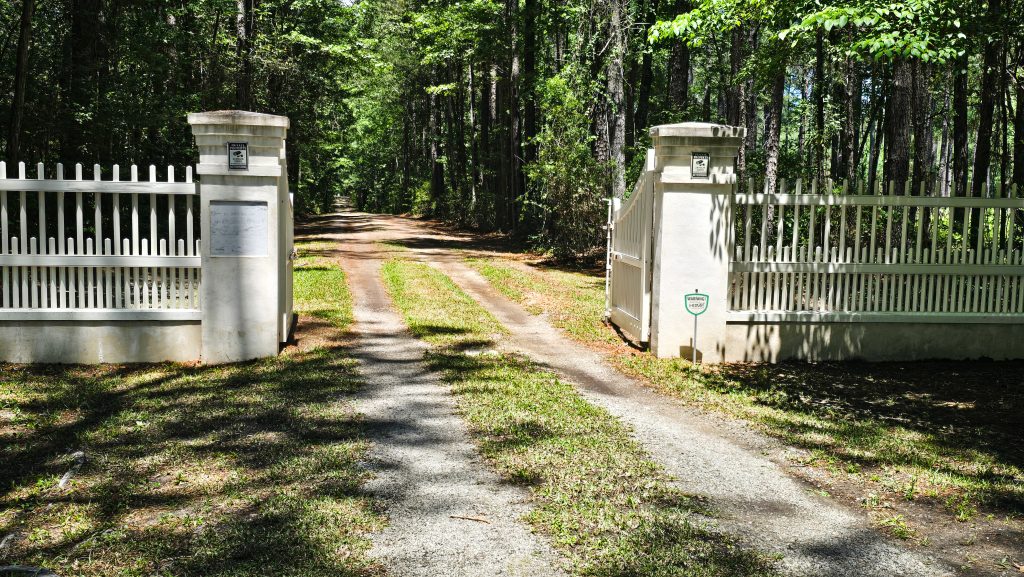
Located on a bluff adjacent to Cooper River, the chapel remains surrounded by forests, wetlands, and uninterrupted natural landscape much as it was during the colonial era. Historians say the chapel’s remote location has played a major role in preserving its original structure and atmosphere. Even today, visitors approach the church primarily by a dirt road winding through wooded land, though the chapel is still accessible by river, just as it was in the 1700s.
📰SUBSCRIBE: Get the latest Berkeley County, SC news delivered to your inbox.

A Church Born on the Colonial Frontier
The story of Pompion Hill begins long before the existing brick chapel was built.
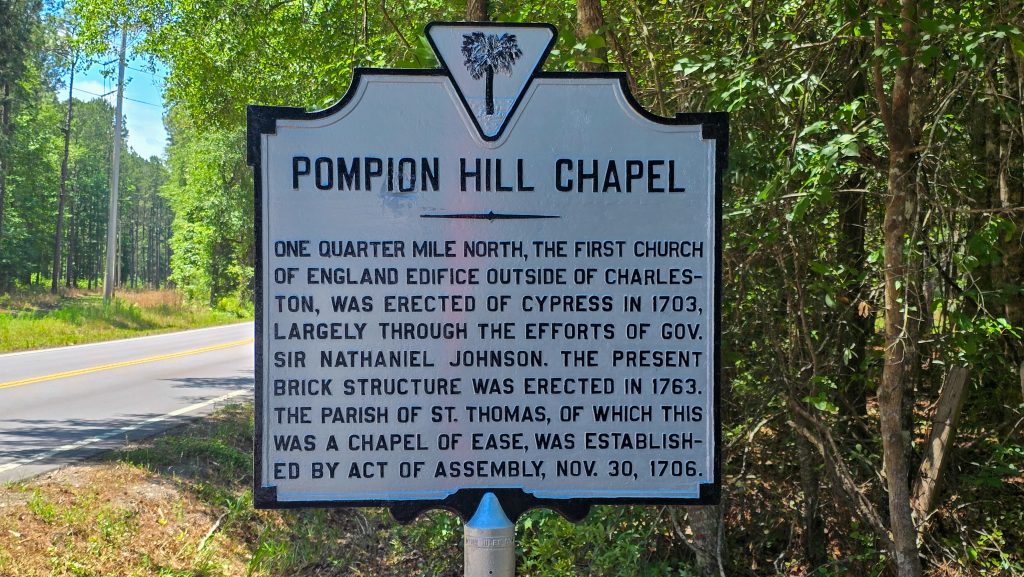
In 1703, Anglicans established a small cypress-frame church at Pompion Hill, making it one of the first Church of England congregations outside Charles Town. At the time, the South Carolina colony was still a frontier society connected by rivers, trade paths and isolated plantations.
When the Anglican Church became South Carolina’s official state religion in 1706, colonial leaders created a parish system to spread English religious and cultural influence throughout the colony. Pompion Hill became part of St. Thomas Parish and served as a “chapel of ease” — a rural church built to spare parishioners the difficult journey into Charleston for worship services.
READ MORE l 25 Incredible Photos From Berkeley County’s Past

Colonial life in Berkeley County during the mid-1700s revolved around plantation agriculture, river transportation and church life. Wealthy rice planters dominated the local economy while enslaved Africans performed much of the labor that fueled the colony’s prosperity. Churches like Pompion Hill were not only religious centers but gathering places for politics, commerce and social life.
The chapel’s name itself reflects colonial Lowcountry culture. Historians believe the name likely originated from the old French word “pompion,” meaning “pumpkin.”

Built During a Turning Point in Colonial America
The current brick chapel was constructed during one of the most pivotal moments in colonial history.
The French and Indian War had just ended in 1763, leaving Britain deeply in debt and setting the stage for tensions that would eventually spark the American Revolution. That same year, Britain issued the Proclamation of 1763 restricting westward settlement beyond the Appalachian Mountains, angering colonists eager to expand inland.
READ MORE l 15 Surprising Things You Never Knew About Francis Marion
At the same time, Charleston was becoming one of the wealthiest cities in British North America thanks to the booming rice and indigo economy. Berkeley County plantations prospered, and prominent Lowcountry families invested heavily in churches that reflected both religious devotion and social status.
By the early 1760s, the original cypress church at Pompion Hill had fallen into ruin. Parish leaders approved plans for a permanent brick chapel and turned to two highly skilled craftsmen to oversee its construction: Zachariah Villepontoux and William Axson.

The French Huguenot Who Helped Build the Chapel
Zachariah Villepontoux was a French Huguenot brickmaker whose craftsmanship became permanently embedded in Lowcountry history.
French Huguenots were French Protestants who followed the teachings of John Calvin. During the 16th and 17th centuries, they faced severe persecution in Catholic France, particularly after the revocation of the Edict of Nantes in 1685. Many fled to the American colonies seeking religious freedom, and South Carolina became home to a thriving Huguenot community.
Villepontoux operated brick kilns at his plantation on the Black River and was tasked with constructing the exterior shell of Pompion Hill Chapel. Historical records indicate he was paid £3000 for the work, while master mason William Axson received £1000 to complete the interior.
For Nikki Gaskins Campbell, managing editor of The Berkeley Observer and a member of the Daughters of the American Revolution, the chapel’s history is deeply personal.
Villepontoux is Campbell’s sixth great-grandfather, a lineage she traces through her great-grandmother, Lessie Villeponteaux. Over generations, the family name appeared in several spelling variations, including Villepontoux, Villeponteaux and Villepontoaux — a common occurrence among French Huguenot families whose names were frequently altered in colonial records and English translations.
The Builders Left Their Marks in the Bricks
One of the chapel’s most fascinating features can still be found carved directly into its original brickwork.
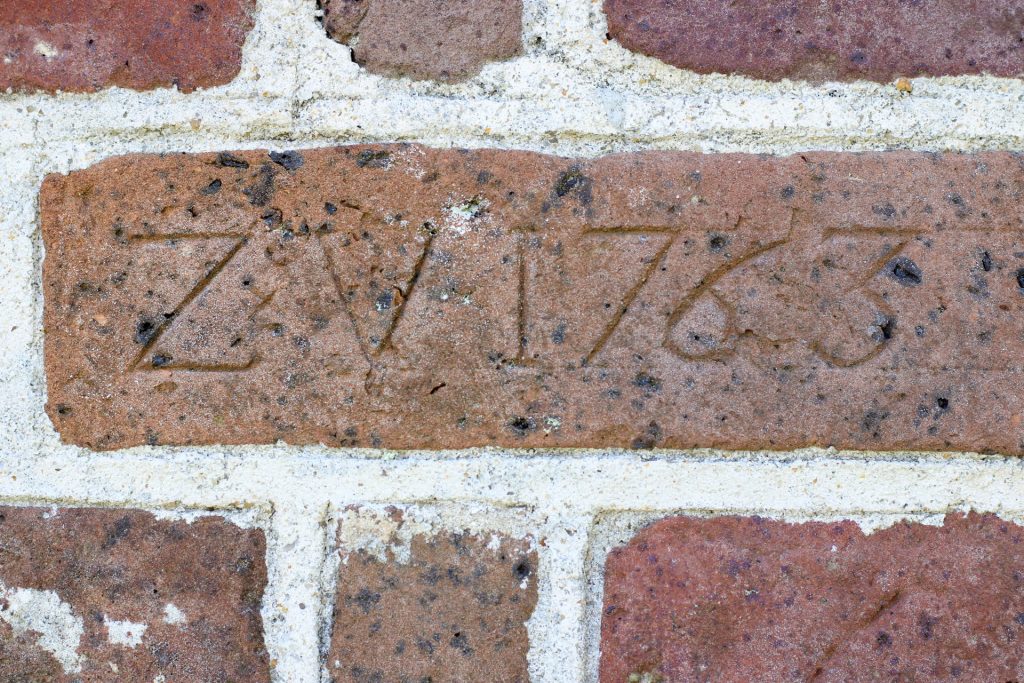
The initials “ZV 1763,” representing Zachariah Villepontoux, remain carved into bricks near two sides of the entrance. Nearby are the initials “M Axson 1763” for William Axson and “N. Cleve 1763” believed to represent another mason involved in the project. Historians also note the presence of Masonic symbols carved into the bricks.
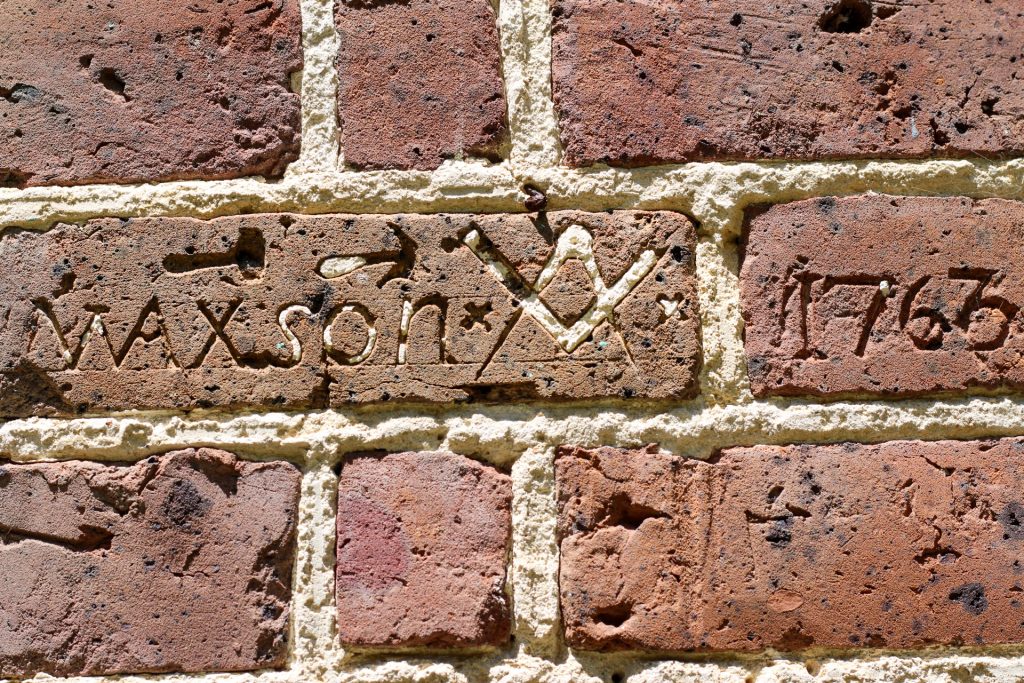
Those inscriptions act almost like colonial signatures — tangible reminders of the craftsmen whose work has survived more than two centuries.
In 1767, Axson joined forces with Villepontoux’s nephew, Francis and another ancestor of our managing editor, to construct St. Stephen Episcopal Church in the town of St. Stephen.
For descendants of those early settlers, Pompion Hill Chapel is more than a preserved historic landmark — it is a living reminder of the people whose craftsmanship and faith helped build colonial South Carolina.
A Georgian Masterpiece Frozen in Time
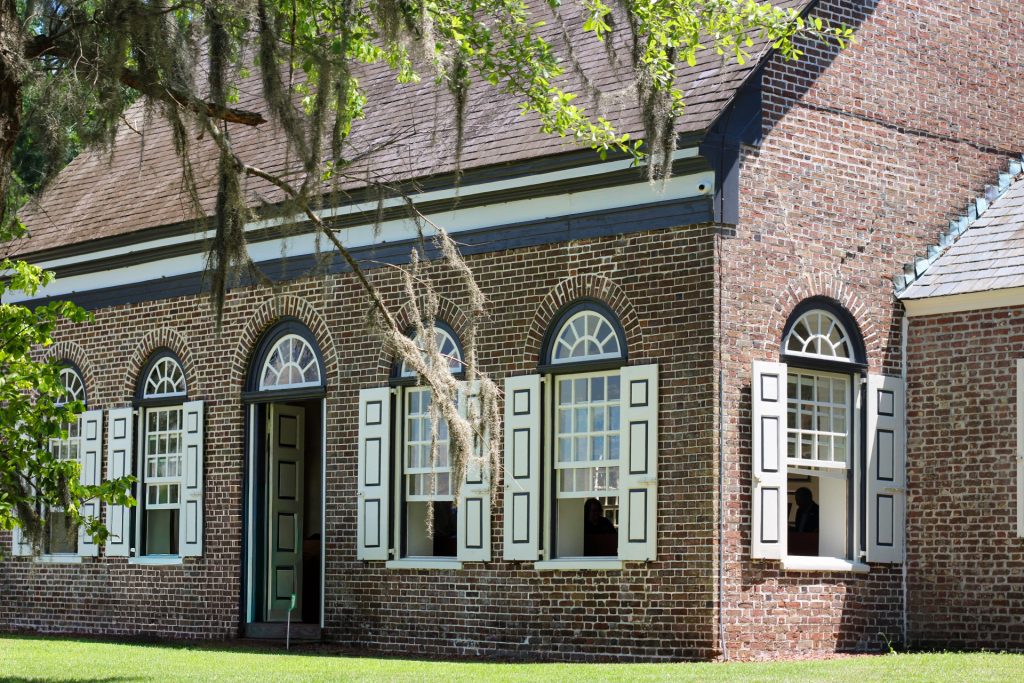
Architecturally, Pompion Hill Chapel is considered one of the purest surviving examples of Georgian Anglican church design in the Lowcountry.
The one-story brick structure features Flemish bond brickwork, a slate jerkinhead roof, compass-head windows and carefully balanced symmetry typical of Georgian architecture. Yet the building also reflects uniquely Lowcountry craftsmanship through its mortar work, shutters and locally made brick.
Inside, much of the original colonial craftsmanship survives.
The chapel’s interior remains remarkably intact with plaster walls, a soaring coved ceiling and brick floors arranged in herringbone and geometric patterns.
The pulpit — crafted from red cedar — is among the chapel’s most striking features. Modeled after the pulpit at St. Michael’s Church in Charleston and inspired by English architect Batty Langley’s design books, the elaborate wineglass-style pulpit features Corinthian columns, an ogee roof and intricate carvings, including an “IHS” monogram.
The church’s layout reflected Anglican worship traditions of the 18th century, balancing scripture and sacraments through the positioning of the altar and pulpit facing one another.
Preserved by Isolation
Unlike many colonial churches that were heavily modernized or rebuilt, Pompion Hill remained largely untouched because of its isolation.
The chapel sits along a remote stretch of the Cooper River surrounded by forest and protected land. Historians say the absence of major development, plumbing and mechanical systems helped preserve the church’s original materials and atmosphere.
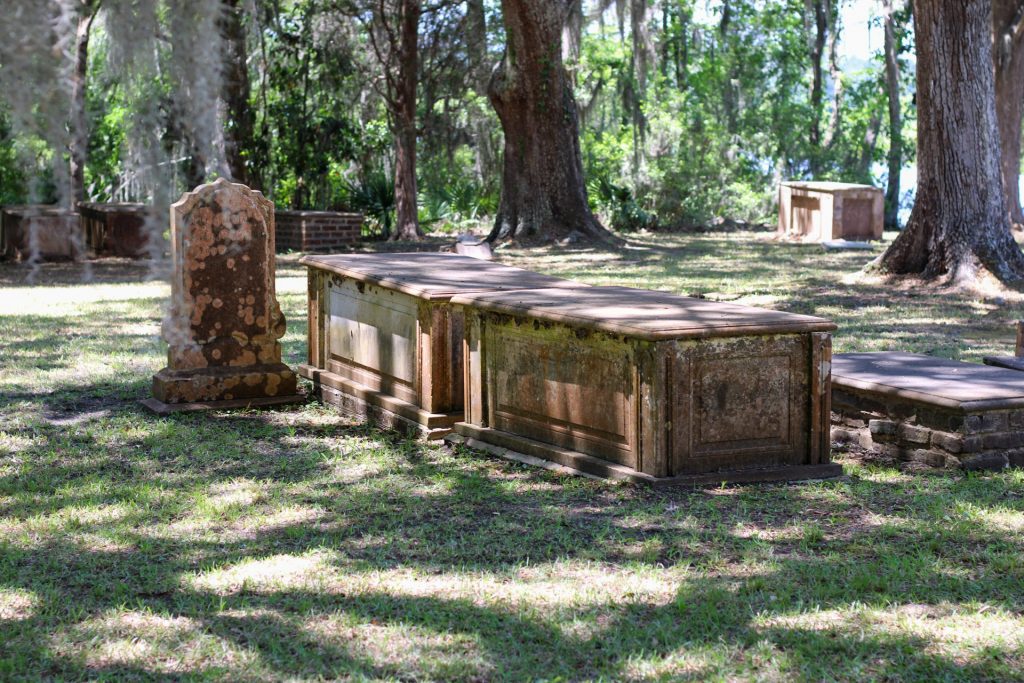
Over the years, however, nature threatened the chapel’s survival. River erosion washed away portions of the cemetery, and in the 1970s preservationists discovered sections of the structure slowly sinking into soft clay soil near the riverbank.
Restoration campaigns rebuilt damaged portions using original bricks wherever possible, including reconstruction of the vestry. Extensive preservation work and paint analysis conducted during the mid-2000s helped restore the chapel’s original colonial color schemes and architectural details.
Today, many of the chapel’s windows, doors, hardware and brick flooring remain original to the 1760s structure.
Who Owns the Chapel Today?
Today, Pompion Hill Chapel is owned by the Episcopal Diocese of South Carolina and maintained by the church’s vestry. It remains an active but infrequently used place of worship.
Special religious services are still occasionally held there, and the graveyard west of the chapel remains active. The church is also periodically opened for historical tours and preservation events.
In 1970, Pompion Hill Chapel was officially listed on the National Register of Historic Places and designated a National Historic Landmark — recognition historians say was long overdue for one of America’s most intact colonial churches.