
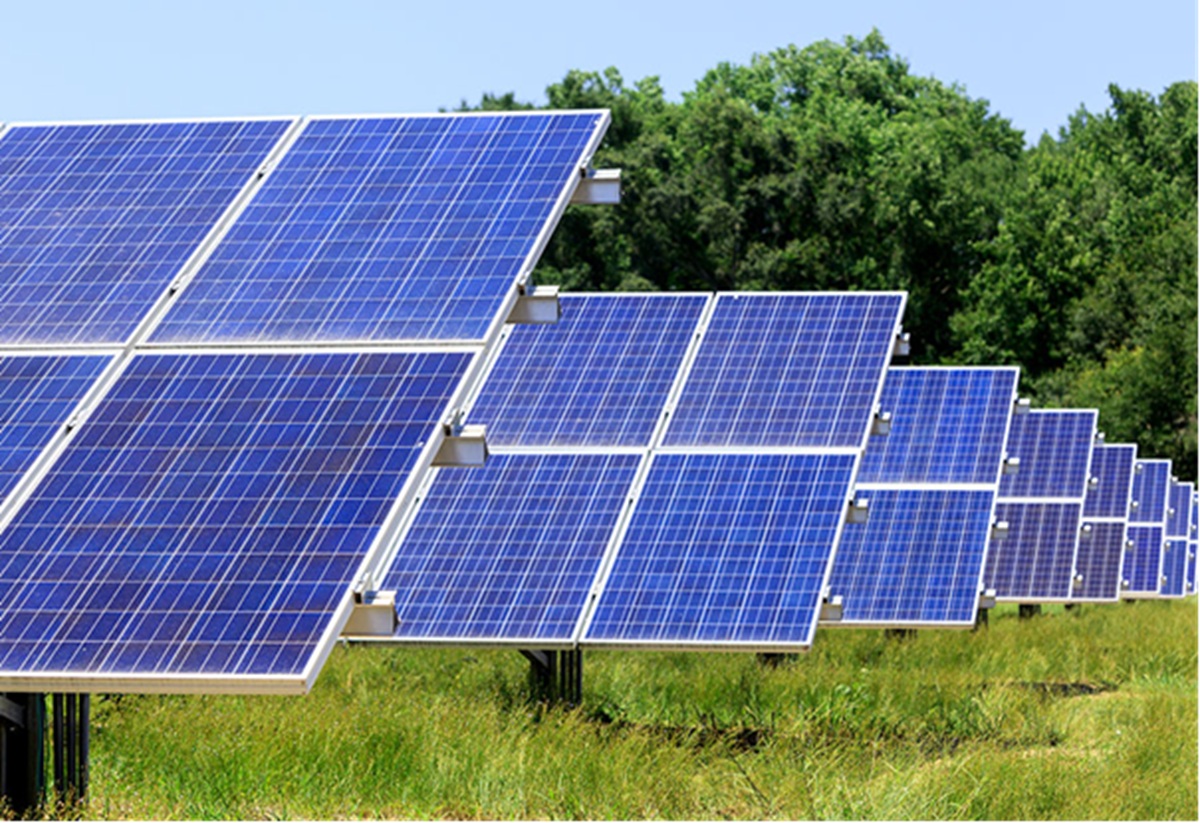
CROSS, S.C. — Following passionate public testimony and a packed council chamber filled with residents from Cross and surrounding communities, Berkeley County Council voted Tuesday night to lift a large-scale development moratorium tied to a proposed solar farm in rural Berkeley County.
The 3-2 vote allows RWE Solar Development LLC, on behalf of Tall Corn Forestry LLC, to continue pursuing plans for the proposed Sandy Run Solar Project, an approximately 1,500-acre solar generating facility in Council District 7.
📰SUBSCRIBE: Get the latest Berkeley County, SC news delivered to your inbox.
The moratorium lift applies to roughly 7,521.79 acres of land tied to the proposal, though developers repeatedly stressed during the meeting that the solar project itself would only impact about 1,500 acres.
Council members Jarrod Brooks, Dan Owens and Amy Stern voted in favor of lifting the moratorium. Councilman Caldwell Pinckney and Councilman Marshall West voted against it. Councilmen Tommy Newell and Phillip Obie II recused themselves due to conflicts of interest, while Councilman Steve Davis abstained.
“I don’t want to hurt the people of Cross,” Davis said before excusing himself from the vote.
The decision came after one of the most heavily attended Berkeley County Council meetings in recent months, with residents voicing concerns about industrial development, property values, infrastructure strain and the future of rural Berkeley County.
Residents Voice Fear Over Rural Character
Many residents who spoke during public comment said they believe lifting the moratorium could permanently change the Cross community.
“People have worked hard, and they’ve earned and saved money to buy their places in the country and want to know that they made a good decision and investment and don’t have to worry about what’s next door and what’s going to happen to their property values,” said Robert Barrett, a longtime Cross resident who opposed the project.
Several speakers opposing the project are also candidates running for Berkeley County Council seats this year.
Matt Hoover, a council candidate, warned about the long-term consequences of large-scale industrial projects in rural communities.
“This may be just another project to some, but for us, this is our home,” Hoover has publicly stated. “This is personal.”
Candidate Michael Parker argued the county’s own land-use protections should remain in place.
“If our county creates a moratorium and zoning protections, then those rules should apply equally to everyone — not just until someone with enough money wants them changed,” Parker told council members.
Parker also pointed to Berkeley County’s long-range comprehensive plan, which recommends maintaining the area’s rural character through 2040.
“District 7 contains some of the last remaining green spaces in this area,” he said. “Once that land is gone, it’s gone forever.”
Ralph Prioleau Jr., a longtime Democratic Party leader who is also seeking a council seat, urged council members to reject the request.
“These people have spoken,” Prioleau said. “What type of representative are you going to be tonight?”
Environmental Groups Back Proposal
While most speakers opposed lifting the moratorium, several environmental organizations publicly supported the project, arguing utility-scale solar is necessary to reduce reliance on fossil fuels.
Taylor Allred of the Coastal Conservation League told council members the Sandy Run proposal is one of the most environmentally responsible solar projects his organization has reviewed.
“The developer, RWE, has implemented all the conservation best practices that we recommend,” Allred said. “They did so without prompting and reached out to us more than a year ago for our input — the first developer to proactively do that.”
Allred said the project includes wildlife-permeable fencing, vegetative buffers, native pollinator plants and plans to avoid impacts to wetlands.
He also linked the proposal to broader environmental concerns involving fossil fuels.
“The greatest threat to wildlife is climate change,” Allred said. “And the Cross coal plant in this community is the largest in our state.”
Paul Black, speaking on behalf of the Sierra Club, also urged council to support the proposal.
“Berkeley County has a way to generate power that does not produce mercury, arsenic or heavy metals that poison the soil,” Black said. “And a way that would benefit the county.”
RWE Defends Project
A representative from RWE pushed back against concerns raised by residents, insisting the project would have minimal impact on the surrounding community.
“Solar is a low-impact use of this land,” said Tory Kaso with RWE. “It will complement and respect the rural character of Cross.”
Kaso said the project site would remain heavily wooded and largely hidden from public view.
“The solar panels for Sandy Run will be located more than a mile from public right-of-way,” Kaso said.
She also disputed claims about the size of the proposal.
“Sandy Run will not cover 7,500 acres,” Kaso said. “The project will submit a development plan for approximately 1,500 acres — only the plan approved through the rezoning process can be constructed.”
RWE officials said the project would generate no odors, emissions or significant noise once operational and would place minimal strain on county services.
The company has also promoted economic benefits tied to the project, including more than $225 million in investment, over $45 million in projected county revenue during the project’s lifespan, more than 100 temporary construction jobs and up to eight permanent maintenance positions.
“The project will interconnect to the Santee Cooper grid and sell power through Santee Cooper, as South Carolina is a regulated market, and generation from the facility cannot be directly sold to a third party,” she added. “Finally, we will use modern solar panels, which are made of glass and aluminum. Those panels that we do use do not pose a public threat to health and safety. RWE will not change the Cross community.”
County Leaders Divided
Councilman Caldwell Pinckney Jr., who represents Cross, delivered one of the night’s strongest arguments against the project.
“The decision is an easy one,” Pinckney said. “The truth has been spoken.”
Pinckney questioned whether the project’s benefits justified the scale of the development.
“They talked about the jobs,” he said. “As far as permanent employment, we’re talking about eight maybe at the most.”
Pinckney also argued the project would provide only a small portion of the state’s energy needs.
“Santee Cooper said what they’re offering is about 9 percent of what they need when it comes to energy,” he said. “Do the math. What’s the benefit?”
While he believes there needs to be alternative sources of power, Councilman Marshall West voted against lifting the moratorium.
“We need more power in the state of South Carolina,” West said. “But I’m not sure if this is the right project. I think this is a short-term answer to a long-term problem.”
Berkeley County Supervisor Johnny Cribb, who only votes if there is a tie, reiterated his opposition to large-scale solar projects in the county.
“I’m not against solar,” Cribb said. “I’m just against it in our county because of our reality with all the growth. Every homeowner is free to put solar panels on top of their home if they want to. It doesn’t have to go on 1,500 acres of land.”
Cribb suggested industrial rooftops could instead be used for solar installations.
“We have 25-30 million square feet of rooftops on industrial sites in this county,” he said. “If industries came in and wanted to put solar panels on top of their rooftops, nobody would be here complaining.”
Councilman Steve Davis, who stated he was a member of the Sierra Club, voiced support for solar energy generally but ultimately abstained from the vote.
“I believe in solar panels. It’s the future.” Davis said. “I try to live a simple life, but you can’t derail change. To negate this opportunity would be foolish to me because the people in the surrounding area are going to get credit off their light bill.”
What Happens Next
Tuesday’s vote only lifts the moratorium and allows the project to continue moving through Berkeley County’s zoning and development review process.
Additional hearings, reviews and approvals will still be required before construction could begin.
Still, for many residents in Cross, Tuesday’s vote marked a major turning point in an increasingly emotional debate over growth, energy needs and the future identity of Berkeley County.
As the meeting adjourned, many residents left frustrated and concerned that rural portions of the county may continue facing pressure from large-scale development projects in the years ahead.
READ MORE:
- Berkeley County Council To Take Up Controversial Cross Solar Farm Proposal After Heated Committee Vote
- Berkeley Electric Co-op Energizes Community Solar Garden; Tesla Pilot Program
- Santee Cooper Board Increases Incentives For Community, Rooftop Solar Programs
- Google To Become Largest Corporate Buyer of Renewable Energy in South Carolina
- Berkeley County’s First Solar Farm Now Generating Electricity