
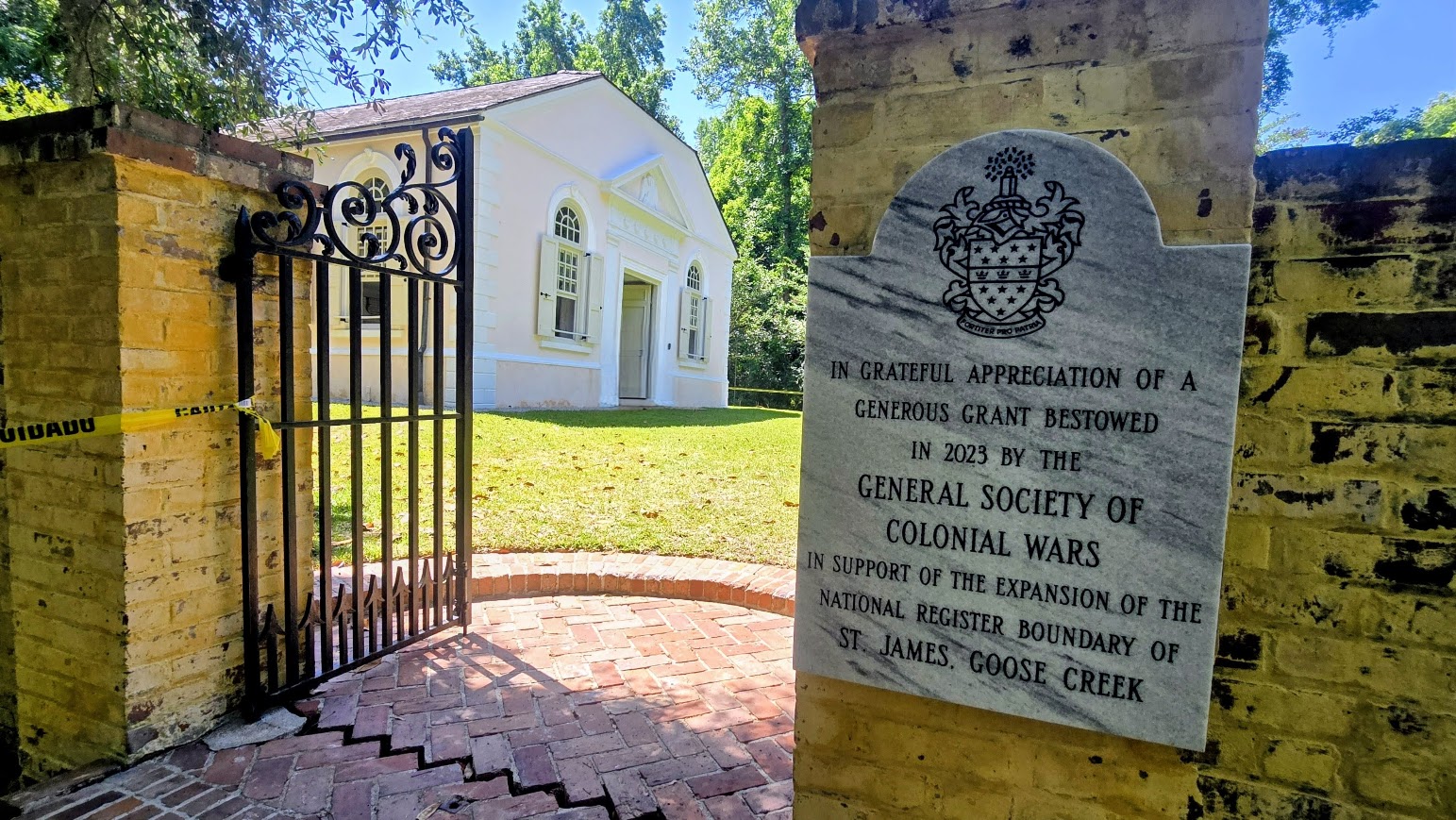
GOOSE CREEK, S.C. — Nestled among towering trees and surrounded by centuries-old graves, St. James Church in Goose Creek offers visitors something increasingly rare in South Carolina — an almost untouched connection to the colonial era.
Built between 1713 and 1719, the church is considered one of the earliest and finest examples of Georgian church architecture in the American colonies.
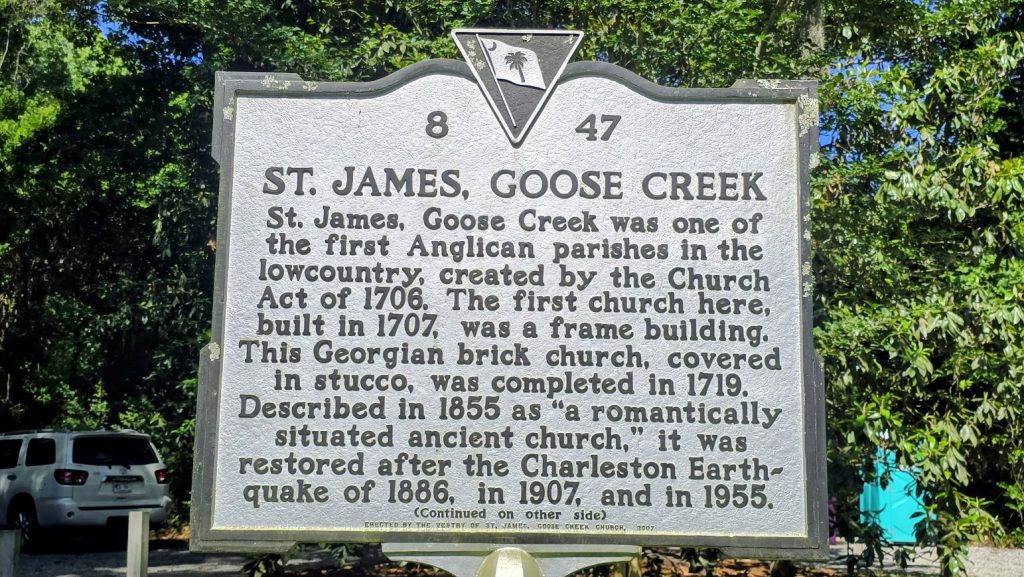
Its stucco-covered brick walls, arched windows and distinctive jerkinhead roof have endured earthquakes, hurricanes, war and centuries of changing history.
Today, the church stands not only as a place of worship, but as one of the Lowcountry’s most historically important structures.
READ MORE l A Colonial Masterpiece in Huger: The Enduring Legacy of Pompion Hill Chapel

Born From Colonial South Carolina
The origins of St. James trace back to 1706, when South Carolina’s General Assembly officially established the Church of England as the colony’s dominant religion.
That legislation created nine original parishes across the colony, including Saint James Parish in Goose Creek.
The first church on the site was a wooden structure, but construction soon began on the current brick sanctuary around 1713. Wealthy early settlers — many with ties to Barbados — helped fund the project as Anglicanism spread throughout the colonies.
The church quickly became a focal point of religious and civic life in colonial Berkeley County.
📰SUBSCRIBE: Get the latest Berkeley County, SC news delivered to your inbox.

A Church Filled With Architectural Detail
Though modest in size, St. James is known for its craftsmanship and distinctive design.
The rectangular church features stucco-covered brick walls and large arched windows framed with elaborate plaster ornamentation adorned with cherub heads. Exterior wooden shutters protect the windows, while massive quoins accent the building’s corners.
At the west end of the sanctuary, the main entrance is framed by Roman Doric pilasters and topped by a triangular pediment.
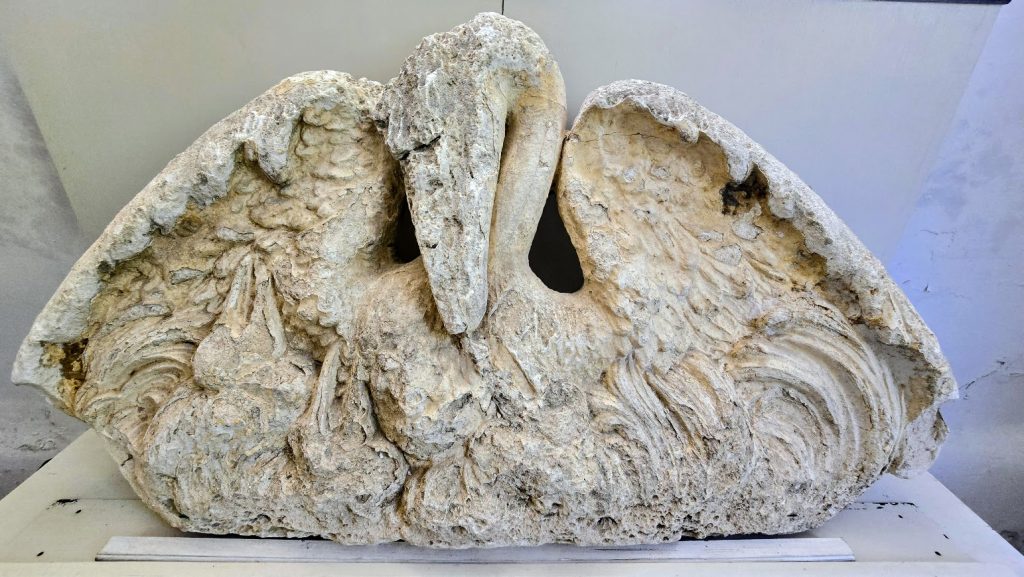
Centered within the pediment is one of the church’s most recognizable symbols — a pelican piercing its own breast to feed its young, a religious emblem adopted by the Anglican Society in 1702 to symbolize sacrifice and nourishment.
Inside, much of the church’s historic character remains intact, from the plaster detailing to the colonial-era layout of the sanctuary.
READ MORE l 25 Incredible Photos From Berkeley County’s Past

The Minister Buried Beneath the Altar
One of the church’s most remarkable features lies hidden beneath the sanctuary floor.
Reverend Dr. Francis LeJau, the first rector of St. James Parish, is buried directly beneath the foot of the altar inside the church.
LeJau was a French Huguenot who fled persecution in France before eventually arriving in South Carolina as a missionary. His detailed journals documenting colonial life and the church’s founding remain an important historical resource today.
His burial beneath the altar reflects the profound role he played in establishing the parish during its earliest years.
Other important figures connected to the church include artist Leila Norton Honour, who created the replacement pelican sculpture in 1909, and noted preservationist Albert Simons, who helped restore the building during the twentieth century.

A Revolutionary War Legend
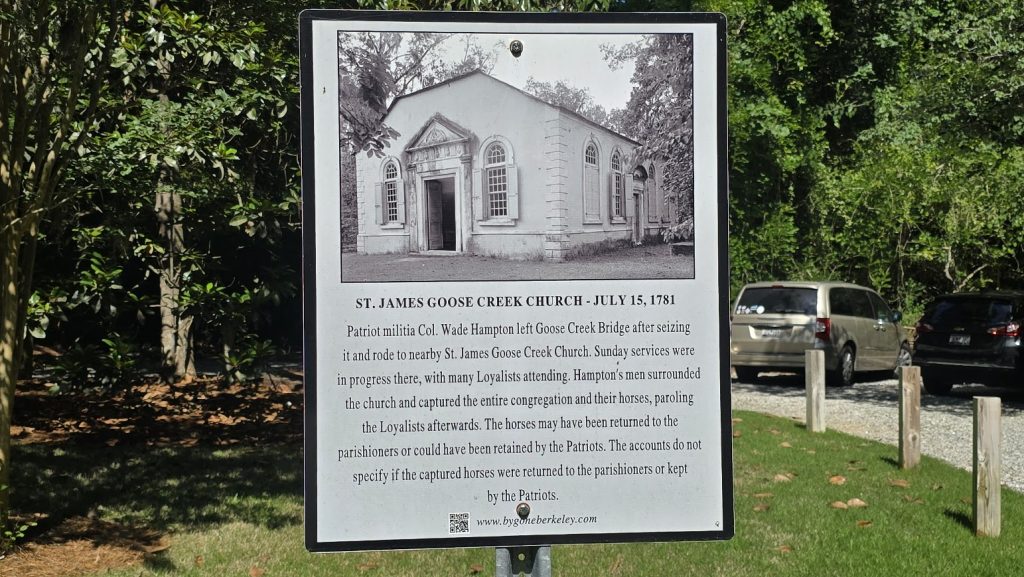
According to local tradition, St. James narrowly escaped destruction during the Revolutionary War.
As British troops moved through South Carolina between 1779 and 1780, the church reportedly was spared because the royal coat of arms remained displayed above the pulpit.
Services were eventually discontinued during the latter years of the war after the Church of England was disestablished in the newly independent United States. The Episcopal Church later experienced a gradual revival in South Carolina during the late 1700s and early 1800s.

Surviving Earthquakes and Time
The church has faced multiple structural threats over the centuries.
By the mid-1800s, the building had fallen into severe disrepair. In 1844, St. Michael’s Church in Charleston funded major repairs that included installing iron tie rods above the side aisles to stabilize the walls.
Then came the devastating Charleston earthquake of 1886.

The quake heavily damaged St. James and caused the entire west gable wall to collapse. Restoration efforts in 1907, 1949 and 1955 ultimately preserved the church and helped maintain many of its original architectural features.
In recognition of its significance, St. James was listed on the National Register of Historic Places and designated a National Historic Landmark on April 15, 1970.

A Churchyard Tied to South Carolina History
The churchyard surrounding St. James contains the graves and memorials of several prominent South Carolinians.
Among them is Ralph Izard, a delegate to the Continental Congress and one of South Carolina’s first U.S. senators.
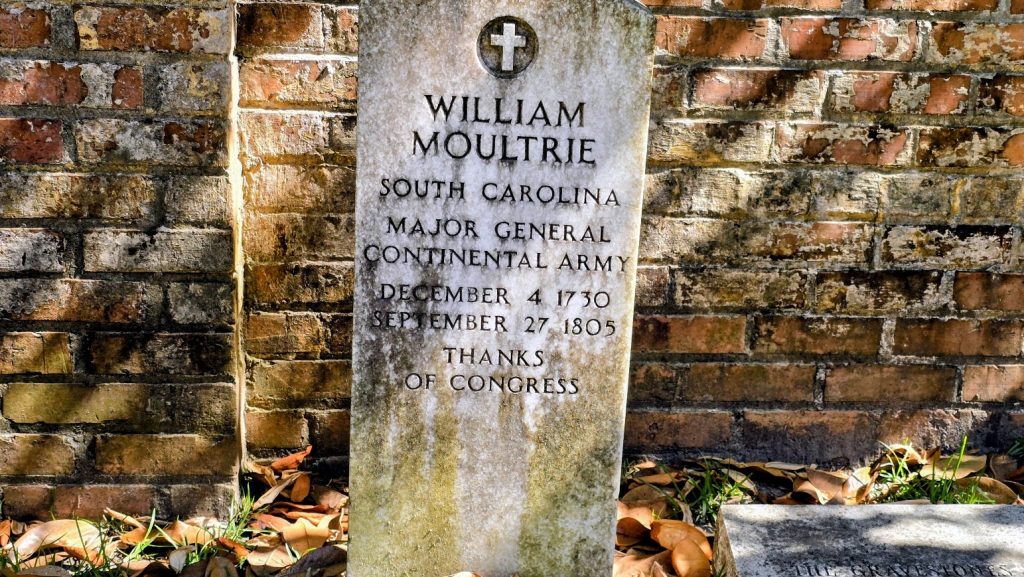
The site also contains a cenotaph honoring Revolutionary War General and former South Carolina Gov. William Moultrie.
Together, the church and its cemetery provide a rare glimpse into the people and events that shaped colonial and early American South Carolina.
Tours Offer Rare Access
Today, the historic church is open for tours by appointment only.
According to church officials, guided tours are available on the third Thursday of each month and last approximately two hours. A suggested $150 donation is requested, with payment accepted later.
More information about tours can be found on the church’s official website at this link.